LOVELY LIBERIA
LAND OF THE FREE
Facts, History, People

I Facts about Libraria
Capital: Monrovia
Founded: 1821
President: Ellen Johnson Sirleaf
Population: 4.294 million (2013) World Bank
Continent: Africa
Currency: Liberian dollar
GDP per capita: 454.34 USD (2013) World Bank
Location and Geography.
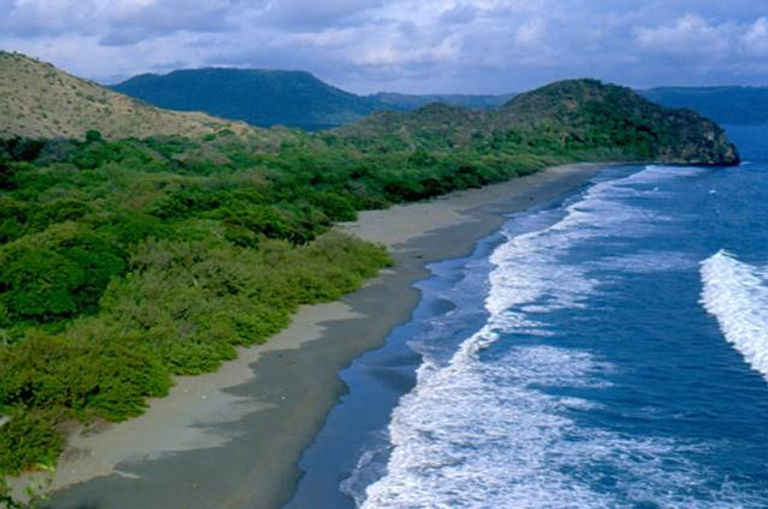
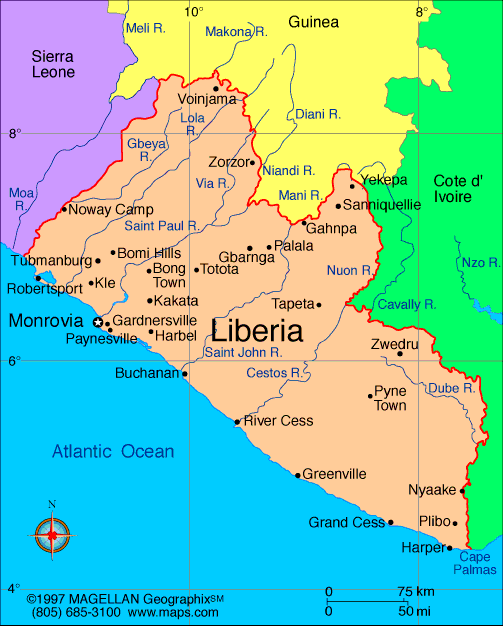
Liberia lies on the western "bulge" of Africa. About half the country is covered by primary tropical rain forest containing valuable hardwoods. A monsoon climate of alternating wet and dry seasons characterizes the weather. Plateaus and mountain ranges in the northern region are rich in iron ore, gold, and diamonds. The Atlantic coastline of 353 miles (568 kilometers) has no natural deep-water harbors and is pounded by heavy surf. The capital, Monrovia, was named for the United States president James Monroe and is situated near the original landing site of the American settlers.
Ellen Johnson Sirleaf (born 29 October 1938) is the 24th and current President of Liberia, in office since 2006. Sirleaf is the first elected female head of state in Africa. She won the 2005 presidential election and took office on 16 January 2006, and she was a successful candidate for re-election in 2011.
Sirleaf was jointly awarded the 2011 Nobel Peace Prize with Leymah Gbowee of Liberia and Tawakkol Karman of Yemen. The women were recognized "for their non-violent struggle for the safety of women and for women's rights to full participation in peace-building work."
Sirleaf was conferred the Indira Gandhi Prize by the President of India Pranab Mukherjee on 12 September 2013. As of 2014, she is listed as the 70th most powerful woman in the world by Forbes.

HISTORY of LIBERIA
The history of Liberia began In the 12th and 16th centuries with mass migrations of diverse tribes fleeing desertification of their homelands. The new arrivals brought skills such as iron smelting, weaving, spinning, and the cultivation of rice and other staple crops in addition to political and social skills and traditions.
Contact with Portuguese explorers was first made in 1461, with the mariners naming the region the Pepper Coast due to an abundance of melegueta Ppeppers. Dutch and British trading posts were setup by the mid-17th century, but the region remained isolated until 1921 when the first shipment of former slaves arrived from America, spurred by abolitionists who believed freed slaves would be unable to coexist in American society.As a result, much effort and money went into creating an African enclave for these individuals, with Liberia’s independence first declared in 1847.
From 1847 to 1980 Liberia was governed by the Americo-Liberian descendents of the original arrivals, a small minority around five percent in the country as more indigenous tribes migrated to the region.
Integration between the colonists and the indigenous people caused contention since the freed slaves’ arrival, leading eventually to a revolution in 1980 which overthrew the Americo-Liberian government and ruling class.
Tribal natives hated the lighter-skinned, mixed-ancestry migrants, their Christian beliefs and supposed cultural superiority, all displayed in the Americanized way of life and architecture.The final straw came after WWII, when fortunes in unregulated foreign investment were received by the government, destabilizing the economy and many of the funds embezzeled by political officials.
From that point on, hostility between the two factions increased until 1979 when inflation of the rice price sparked riots ending in the 1980 military coup and the formation of the People’s Redemption Council, led by Master Sergeant Samuel Doe.
Doe was elected president in a ballot widely derided as fixed, with the resulting civil strife, counter-coup and government repression ramping up an already unstable situation.
Charles Taylor’s National Patriotic Front of Liberia led the revolution in 1989 with the help of Cote d’Ivoire and Burkina Faso military, and the devastating Civil War period began with the defeat of Doe’s forces and his execution.
From then until 1996, one of Africa’s bloodiest conflicts raged, with over 200,000 Liberians killed and millions displaced into refugee camps across the country’s borders. Infrastructure was destroyed, and by the time a peace deal had been brokered, Liberia was a wreck.
Worse was to come, as under Taylor’s presidency the country became a world pariah for illegal timber exports and blood diamonds to support neighboring Sierra Leone’s Revolutionary United Front in their own civil war.
By 1999, Liberia was again up in arms, with the rebel Liberians United for Reconciliation and Democracy fighting against Taylor’s rule. In 2003 they were joined by another rebel group, the Movement for Democracy in Liberia, resulting in Taylor being indicted for crimes against humanity in June.
Under pressure from the Women of Liberia Mass Action for Peace and the international community, Taylor finally resigned and fled to Nigeria, leaving the country to recover under the United Nations Mission.
New elections, considered fair and free, took place in 2005, with Harvard-trained economist Ellen Johnson Sirleaf becoming Africa’s first female president. Her first move was to successfully request the extradition of Taylor from Nigeria and his removal to The Hague for trial.
Since then, her government has inaugurated a Truth and Reconciliation Commission tasked with addressing the causes of the civil war and the crimes committed. The government has also done much to improve stability and economic security.
PEOPLE of LIBERIA
Although the settlers and their descendants, known as American-Liberians, defined the boundaries of the nation-state, made English the official language, and dominated
the government and economy for almost one hundred fifty years, they have never constituted as much as 5 percent
of the population.
The remaining people belong to sixteen broadly defined ethnolinguistic groups of the Niger-Congo family. The Mel (West Atlantic) group consists of the Gola and Kissi, who
are believed to be the oldest inhabitants.
The Mande group, made up of Mandingo, Vai, Gbandi, Kpelle, Loma, Mende, Gio, and Mano peoples, is believed to have entered the area from the northern savannahs in the
Fifteenth century.
The southern and eastern areas are inhabited by people
who speak Kruan (Kwa) languages; the Bassa, Dei (Dey), Grebo, Kru, Belle (Kuwaa), Krahn, and Gbee are
linguisticallyrelated to the peoples of the Niger delta far to
the east.
All these groups were present in the territory when the American settlers arrived in 1822. Although Liberia has
been independent since 1847, making it the oldest republic
in Africa, most of its citizens have never felt allegiance to
the nation-state. With most government institutions concentrated in coastal cities, many inhabitants of the interior had little sense of being Liberian until the second
half of the twentieth century.
The diverse tribal ethnicities making up the population of Liberia today have all added to the richness of cultural life
in the country.
For most of Liberia's history, the primary meaningful division onthe national level was between the tribal majority and the settler minority; with few exceptions, one's tribe made little difference in terms of life chances and upward mobility.
After the military coup of 1980, however, a new tribalism or politically strategic ethnicity began to emerge. Samuel Doe, the leader of the military government and a Krahn from
Grand Gedeh county, systematically filled the elite military units and government positions with members of his ethnolinguistic group.
As opposition to his autocratic and repressive regime grew during the 1980s, it took the form of ethnically identified armed factions that attacked civilians on the basis of their presumed tribal affiliation.
Western journalists attributed the violence to "ancient tribal hatreds" even though these ethnically identified groups had emerged only in the previous ten years.